
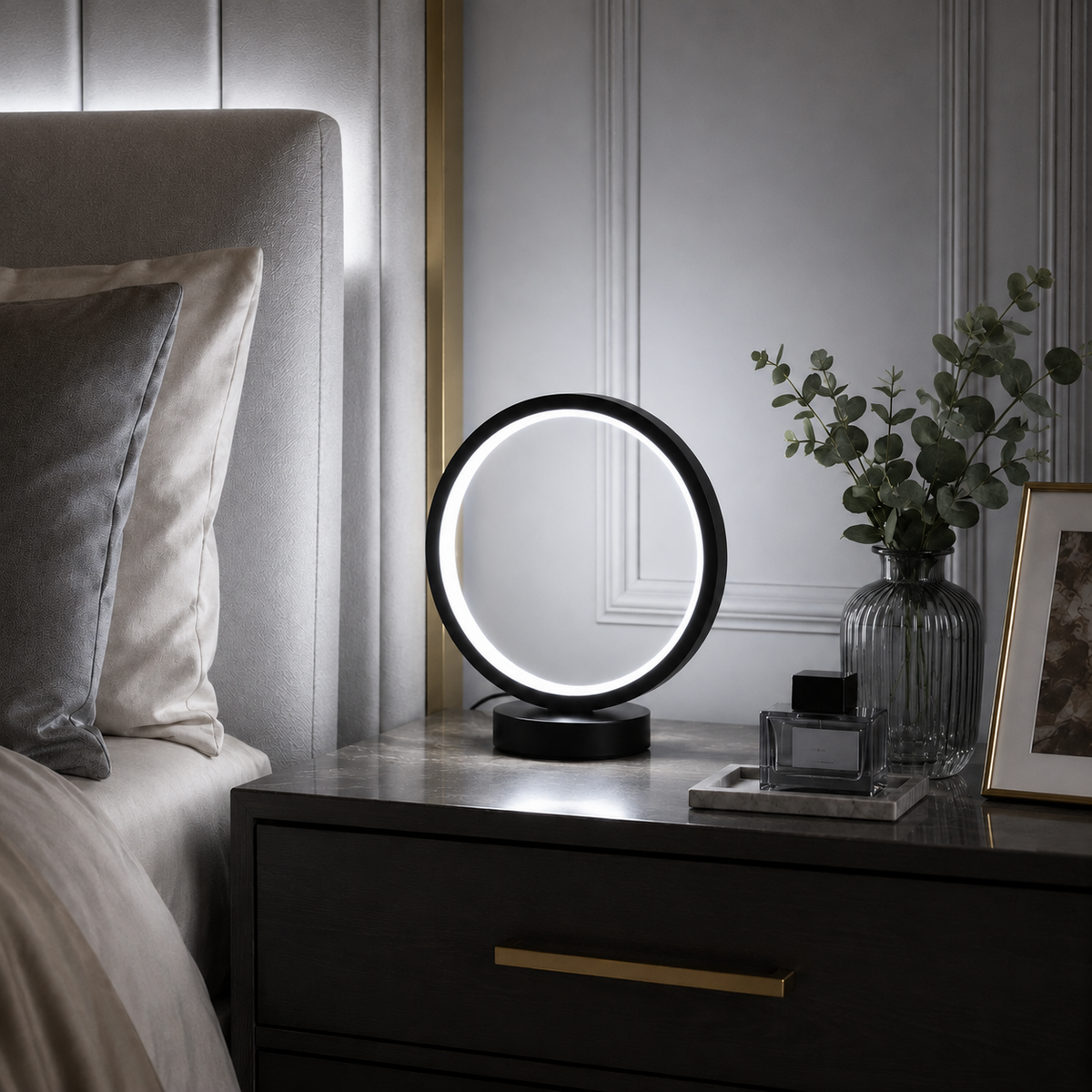
Two lights can produce similar levels of brightness and still make a room look completely different. Often, colour temperature is the reason.
Colour temperature is measured in Kelvin (K) and describes how warm or cool white light appears.
As a general guide:
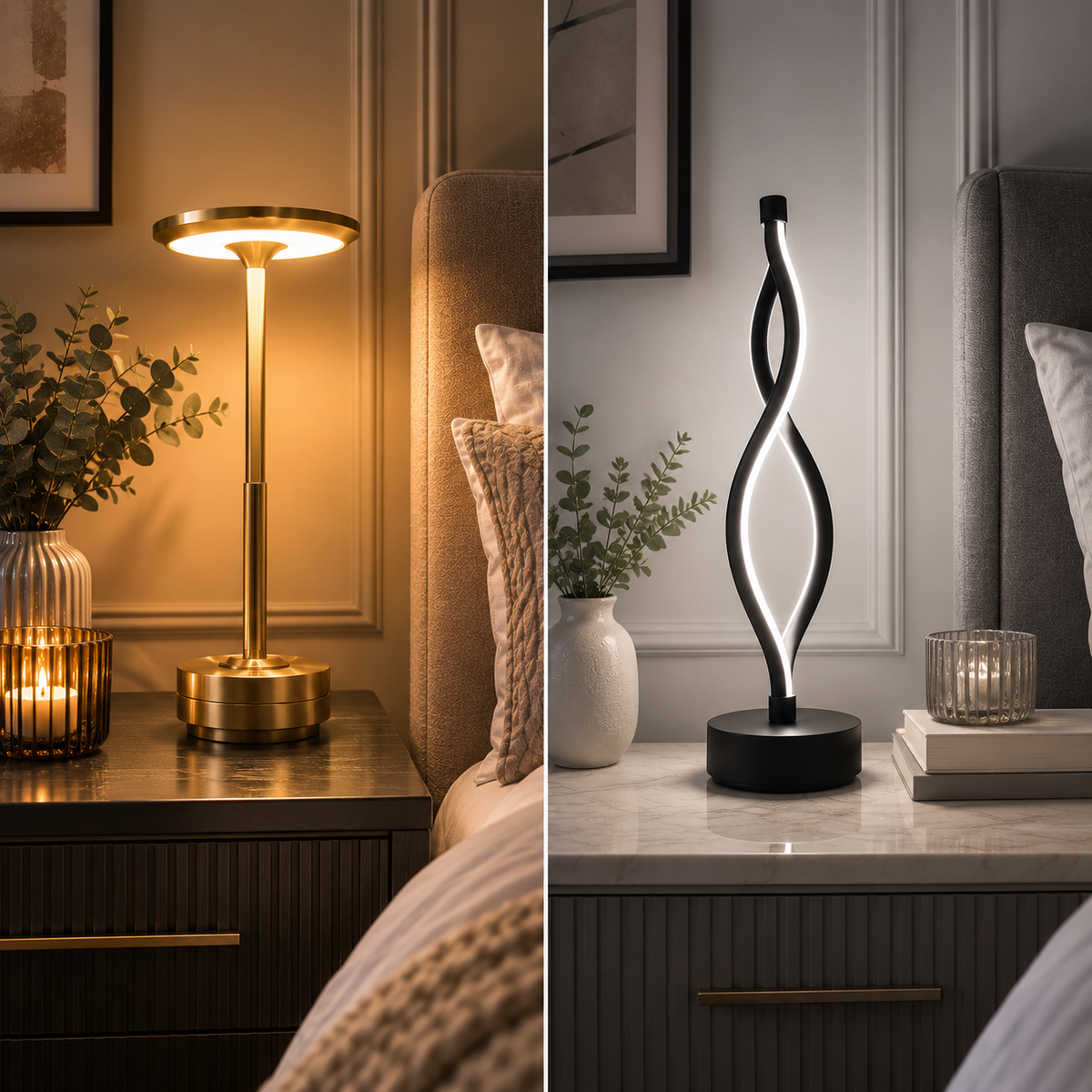
2700K–3000K: warm white
Around 4000K: neutral to cooler white
5000K+: cooler, daylight-like light
Where does warm white work?
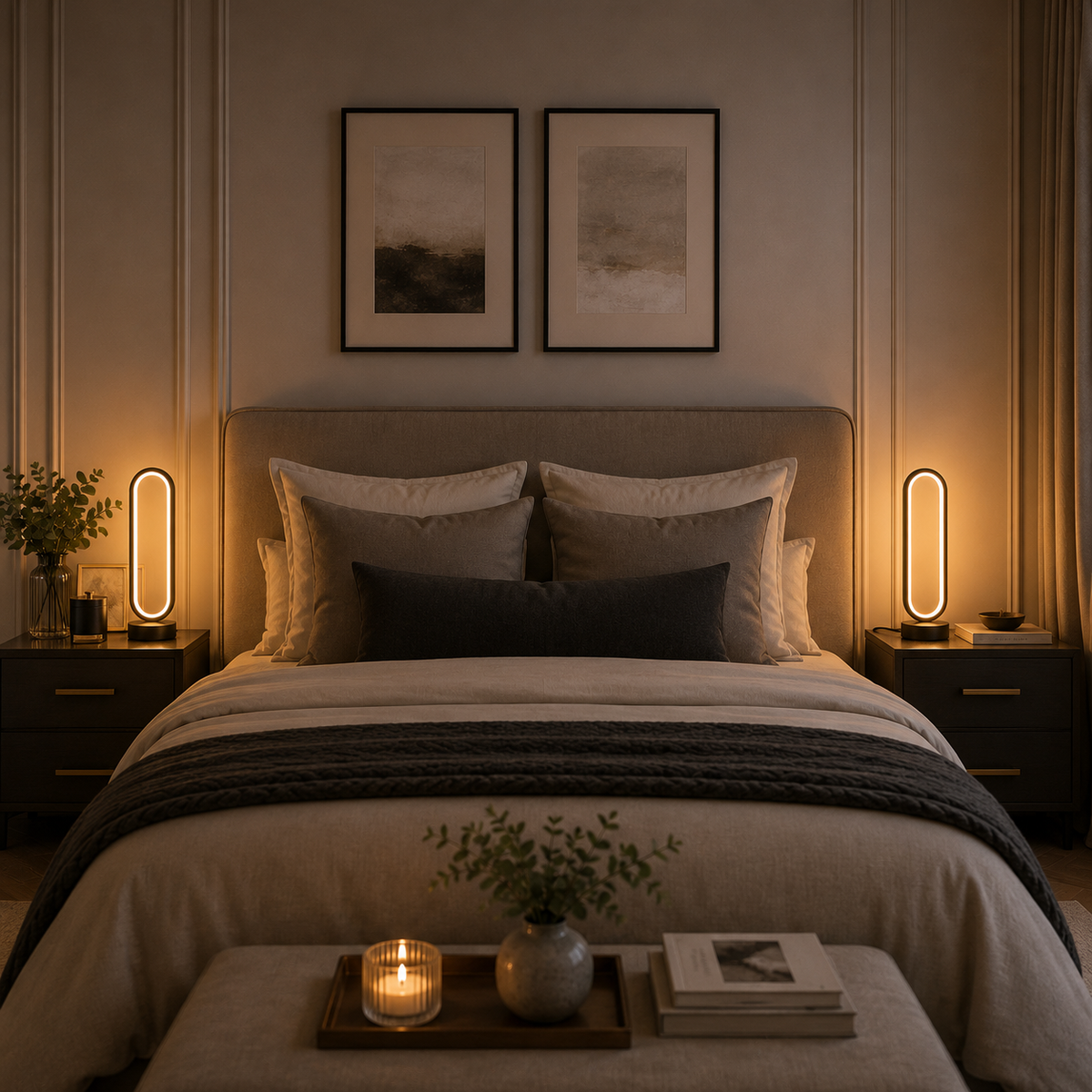
Warm white is commonly used in bedrooms and living spaces, where its softer appearance works particularly well with warm woods, neutral fabrics and lower-level evening lighting.
When is cooler light useful?
A clearer, more neutral white can work well where visibility is important, including desks, dressing areas and other task-focused spaces.
That doesn't mean cooler is automatically better for tasks. Comfort and the surrounding room still matter.
What about adjustable lights?
Lighting with multiple colour temperatures gives you more flexibility when one lamp serves several purposes.
You might choose clearer illumination while reading or working, then switch to a warmer setting later.
There isn't one universally correct colour temperature. Start with what you're using the light for, then consider how you want the surrounding room to look and feel.

Leave a comment
This site is protected by hCaptcha and the hCaptcha Privacy Policy and Terms of Service apply.