
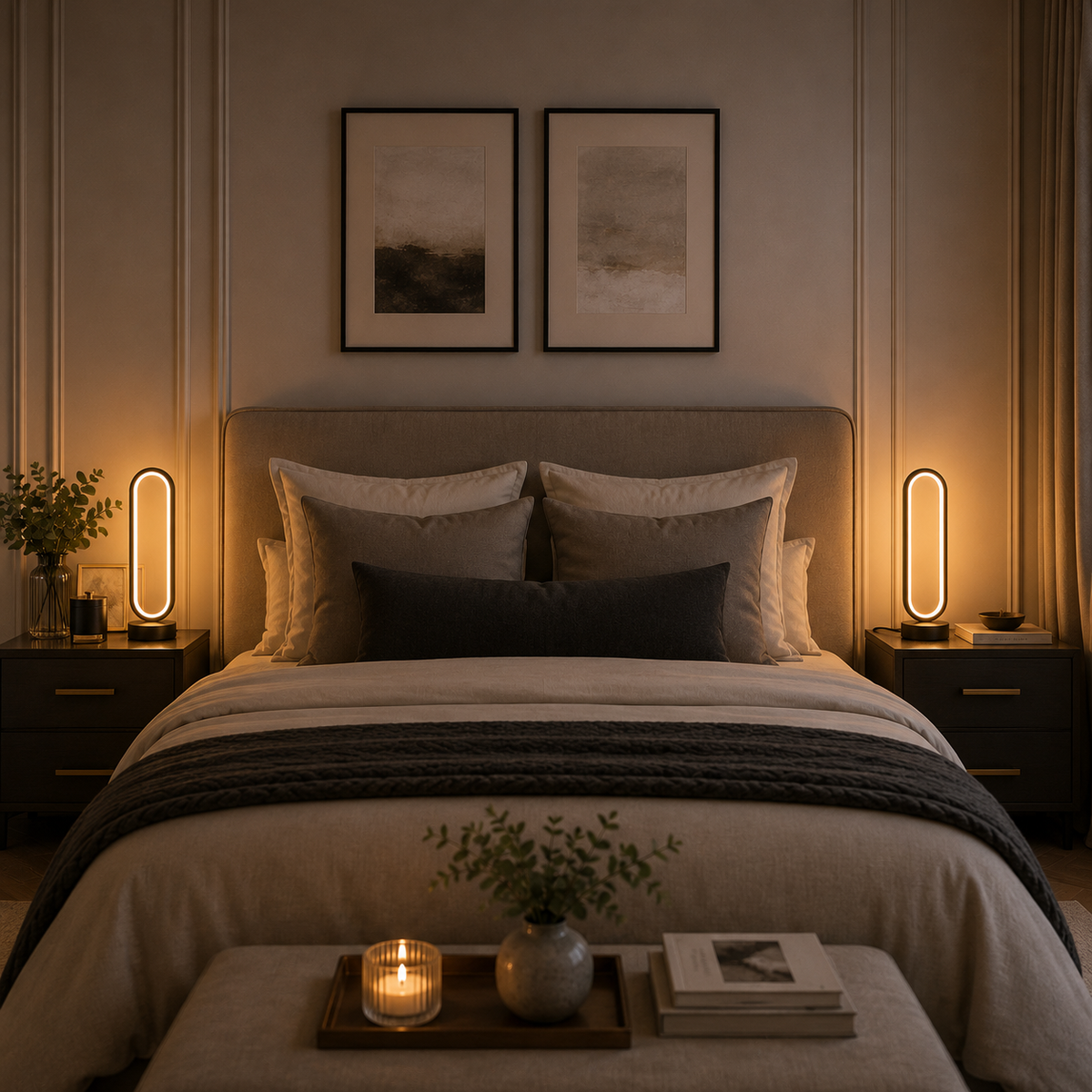
A bedroom rarely needs the same type of light all the time. You might need clearer illumination while getting ready, focused light for reading and something much softer later in the evening. Relying on one ceiling light makes it difficult to do all three well.
Start with ambient light
Ambient lighting provides the general level of light across the room. Think of this as the foundation rather than the source responsible for every task.
Put light where you use it
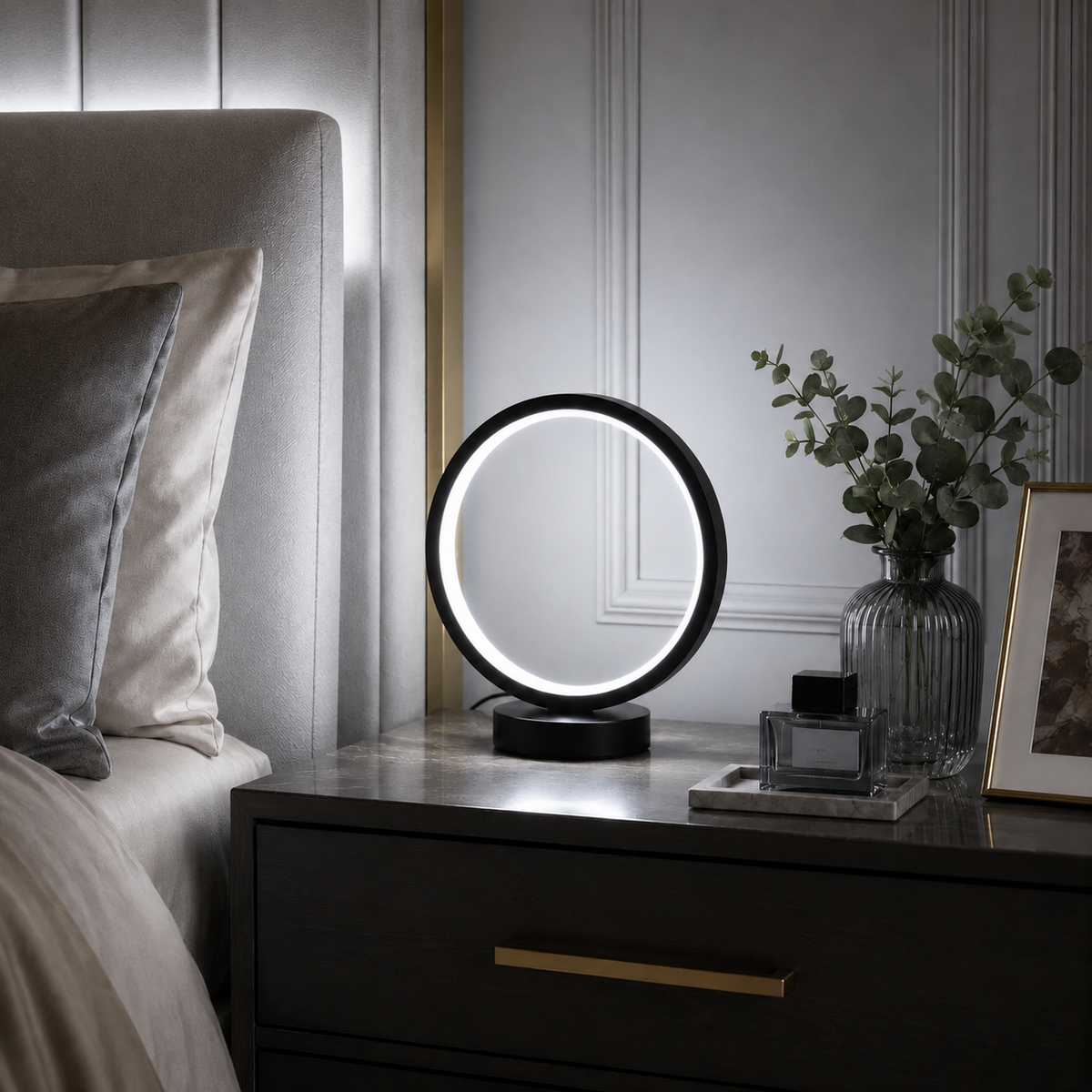
Task lighting brings illumination closer to where it's actually needed. Beside the bed, for example, a well-positioned lamp can provide useful reading light without requiring you to brighten the entire room.
The same principle applies to dressing tables, desks and reading corners.
Add lower-level light
Table lamps, wall lights and other lower-level sources help illuminate areas that can otherwise disappear once the main light is switched off.
This variation creates depth and, importantly, gives you more choice over how much of the room you illuminate.
Don't make every light do everything
Different lights can serve different purposes. A wall-mounted bedside light might provide focused illumination, while a sculptural table lamp elsewhere adds a lower layer of light.
The goal isn't simply to add more lamps. It's to give each light a clear job within the room.

Leave a comment
This site is protected by hCaptcha and the hCaptcha Privacy Policy and Terms of Service apply.