
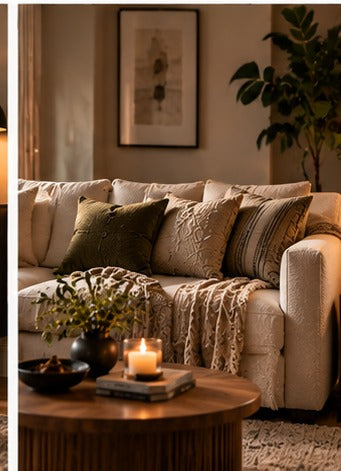
Living Room Storage: Closed Storage vs Open Display comes down to proportion, purpose and restraint. The strongest interiors feel collected rather than crowded, with furniture doing the practical work and accessories adding a controlled layer of character.
Hide the things that create visual noise
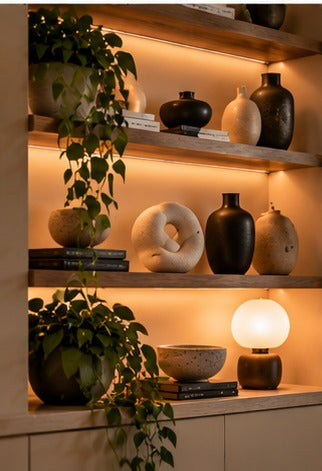
Controlling visual clutter matters in a home that is actually lived in. This is especially relevant when the goal is living room storage: closed storage vs open display. Keep the most attractive objects visible and give the practical items a dedicated place behind a door, in a drawer or inside a basket. Some objects deserve to be displayed; chargers, paperwork and miscellaneous everyday items usually do not. Closed or semi-closed storage is valuable because it protects the calm of the room without asking you to own less than you realistically use.
Let texture do some of the work
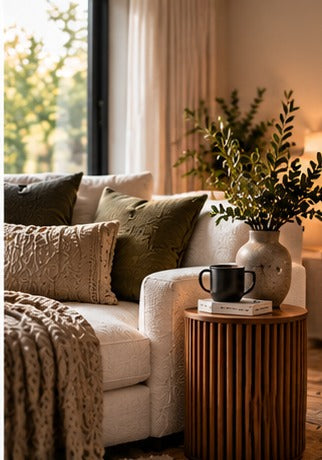
Texture adds depth without forcing more colour into the scheme. This is especially relevant when the goal is living room storage: closed storage vs open display. The contrast between a smooth table, a tactile storage piece and a sculptural ceramic object can make a restrained palette feel richer while keeping the overall room quiet. Neutral rooms do not need more colour to become interesting. Grain, woven surfaces, ceramics and matte finishes create depth through texture instead.
Give every piece a clear job
Usefulness should be decided before decoration. This is especially relevant when the goal is living room storage: closed storage vs open display. Before adding anything, decide what problem it solves. A side table might hold a drink and a lamp; a console can create a landing zone; a cabinet can hide everyday clutter. When a piece has no clear purpose, it is more likely to make the room feel busy. Function is not the opposite of style: it is what allows the styling to stay controlled over time.
Repeat a small colour palette
A limited palette makes the whole idea easier to integrate. This is especially relevant when the goal is living room storage: closed storage vs open display. Repetition helps furniture and decorative pieces feel as though they were selected together rather than collected at random. Choose two or three tones that already exist in the room and repeat them rather than introducing a new colour with every accessory. Warm wood, black, ivory and soft neutrals are easy to combine because they create contrast without relying on a strong accent colour.
Bring the idea into your own room
If you are comparing pieces for this kind of scheme, the Arden Rattan Storage Cabinet and Hadley Lattice Storage Side Table offer two useful starting points with different proportions and visual weight. Use the measurements and the room’s existing materials as the deciding factors rather than trying to copy a styled image exactly.
Explore the Varenmere collection for furniture and sculptural home accessories selected for modern, considered interiors.

Leave a comment
This site is protected by hCaptcha and the hCaptcha Privacy Policy and Terms of Service apply.