
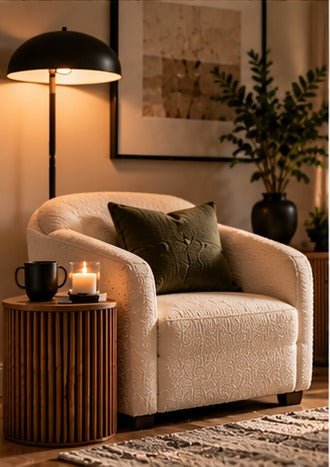
How to Choose Furniture for an Open-Plan Living Space is less about following a fixed formula and more about making a few decisions in the right order. Start with proportion and function, then use colour, texture and accessories to make the space feel deliberate rather than over-styled.
Use furniture to define zones
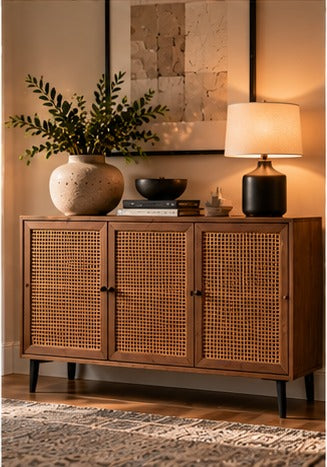
Furniture can establish clear zones without physical dividers. This is especially relevant when the goal is choosing furniture for an open-plan living space. In an open-plan space, furniture can create boundaries without walls. A console behind a sofa, a coffee table centred on a seating group or a side table at the edge of a reading area can make each zone feel purposeful. Keep the materials and colour palette related so the zones feel connected even when they perform different jobs.
Start with proportion, not decoration
Scale is the first decision worth getting right. This is especially relevant when the goal is choosing furniture for an open-plan living space. Measure the usable wall or floor area, then think about the visual weight of the piece as well as its dimensions. Leave enough space around furniture for the eye to read each item clearly. In a compact room, one well-proportioned piece often works better than several undersized ones competing for attention. A room usually feels unsettled when the scale is wrong before the styling even begins.
Protect the route through the room
Movement through the space should stay effortless. This is especially relevant when the goal is choosing furniture for an open-plan living space. Look at the path from the doorway to the sofa, windows and other frequently used areas, then keep that route visually and physically clear. A few extra centimetres of breathing space can make a room feel calmer. This is especially important in narrow halls and smaller living rooms, where circulation is part of the design. Furniture should support movement rather than create an obstacle course.
Create repetition across the room
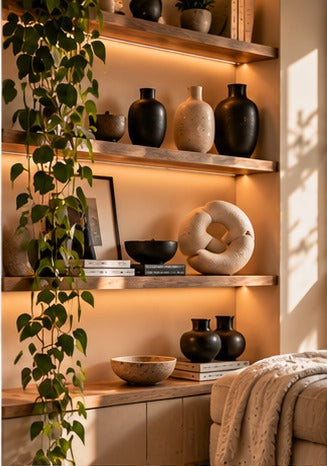
Repeating a few visual ideas works better than matching everything. This is especially relevant when the goal is choosing furniture for an open-plan living space. A cohesive room does not require matching furniture. Instead, repeat a few visual cues: the same wood tone in two places, a black accent on opposite sides of the room, or rounded forms in both a table and an accessory. Repetition connects pieces that were bought separately and gives the eye a reason to read them as one scheme.
Bring the idea into your own room
Within the Varenmere collection, pieces such as the Marlow 3-Tier Side Table, Bramley Square Coffee Table and Cotswold 120cm Rectangular Coffee Table can be used to build the furniture layer first, then refined with a smaller number of accessories. Use the measurements and the room’s existing materials as the deciding factors rather than trying to copy a styled image exactly.
Explore the Varenmere collection for furniture and sculptural home accessories selected for modern, considered interiors.

Leave a comment
This site is protected by hCaptcha and the hCaptcha Privacy Policy and Terms of Service apply.